Candidate ranking that is more than keyword matching
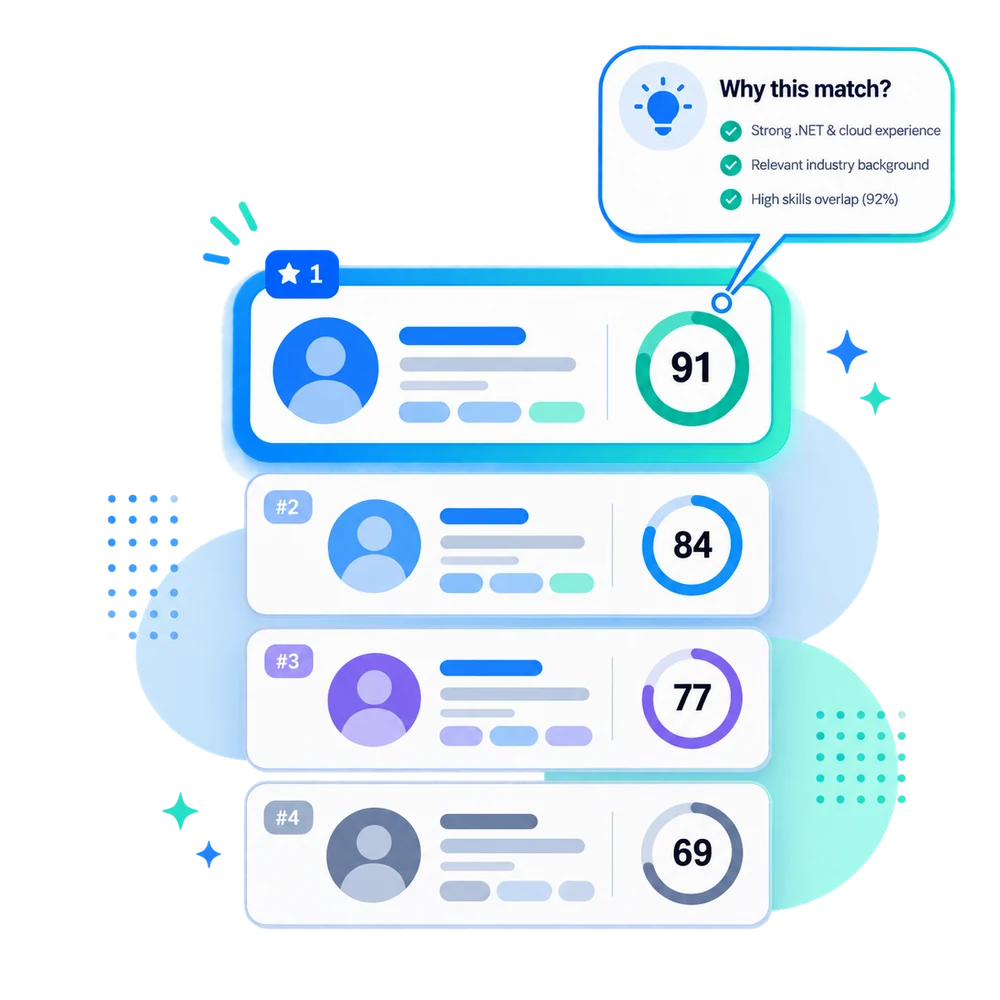
Many tools rank applicants by how textually similar a CV is to a job post. That rewards resume writing, not suitability. AI Resume ranks candidates by evaluating structured experience against your role's actual requirements — and explains every position in the list.
From role to ranked shortlist
- 1
Role context
The dataset describes the job: title, seniority, and what the position actually needs.
- 2
Candidate analysis
Each CV becomes structured data — skills, experience, education — before any judgment happens.
- 3
Rubric evaluation
Candidates are assessed against the role with the same criteria, every time.
- 4
Score + rationale
Every score ships with a written explanation and the CV evidence behind it.
- 5
Ranked shortlist
The result is an ordered list you can hand to a hiring manager or client as-is.
Compare candidates side by side
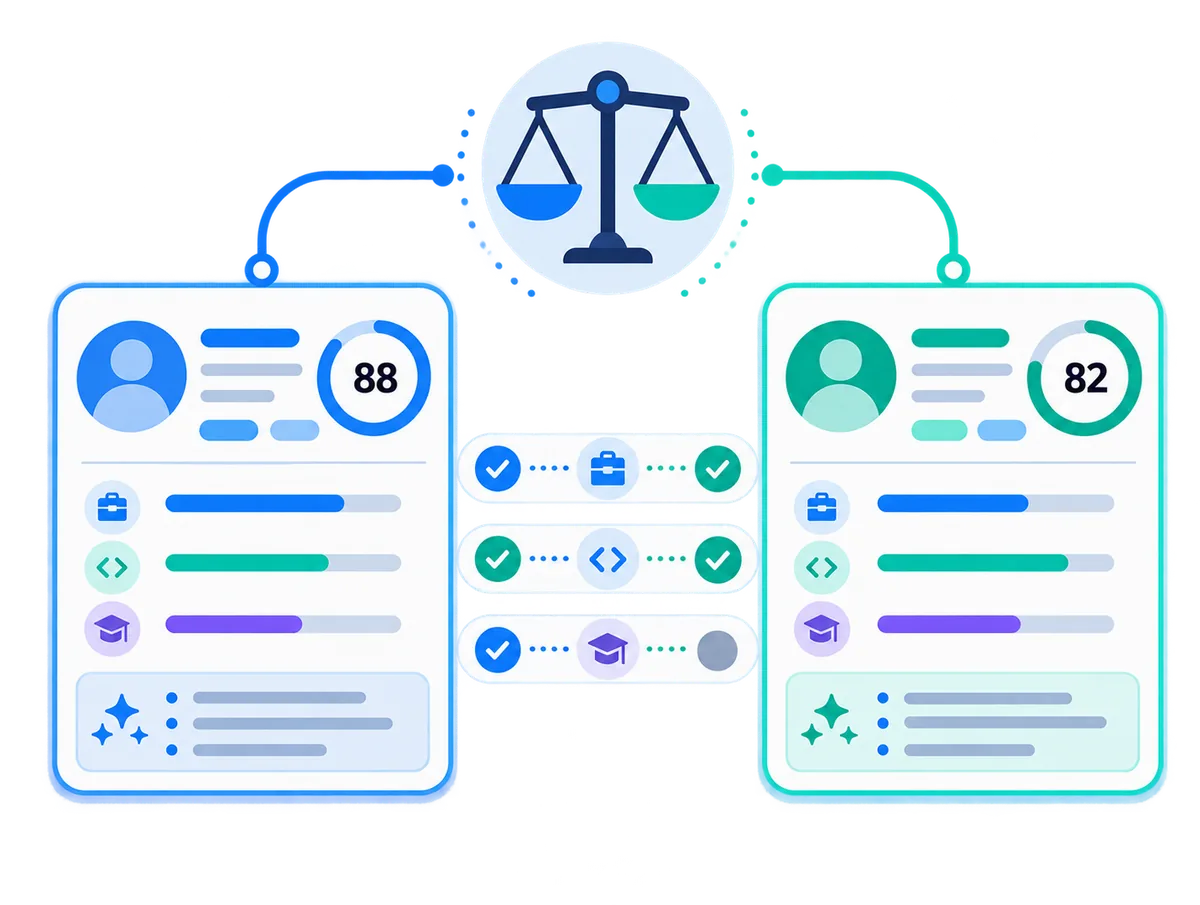
Ranking answers "who should I read first?" — comparison answers "which of these two do I put forward?". AI Resume lets you place candidates next to each other with the same criteria, the same evidence format, and no context switching between PDFs.
Because every data point traces back to the CV, comparison discussions move from "I have a feeling about this one" to specifics both sides can check. That makes hiring conversations shorter and handoffs — recruiter to manager, agency to client — defensible.
Consistency is the point
Human rankings drift: energy fades, criteria shift, and two reviewers rarely weigh the same CV identically. A rubric applied by software is the same for candidate #1 and candidate #200 — which is what makes a shortlist comparable at all. Recruiter judgment stays in charge of the final call; the ranking just makes sure that judgment starts from an honest, ordered picture.
Related: resume screening software · AI Resume for recruiting agencies